Information at Your Reach
Daily Blog: day 81
Temptation Gifts

Photo is by @eamesbot on vecteezy
People say that money is a power that will get you somewhere. It will give someone an advantage over the common folk. This is why one of the most repeated and frequent forms of corruption is bribery. It is defined as the offering, giving, soliciting, or receiving of any item of value as a way of influencing the actions of an individual holding a public or legal duty (Cornell Law School, 2021).
From the 20th to the 21st century Philippines, there has been no decrease in bribery cases of politicians and people with authority. The most recent one is the Pastillas Bribery scandal at the Bureau of Immigration in 2020 (Gotinga, 2020). It was about Chinese nationals who were allegedly given "special treatment." It included facilitating their entry or assisting the departure of trafficked people at the airport for a price of ₱10,000 each. Senator Hontiveros said that the scheme generated up to ₱40 billion (Yap, 2020).
One of the most infamous bribery cases in Philippine politics is the Rolex 12 of Former President Marcos. Contrary to popular belief, it was actually an Omega watch, not Rolex. Marcos gave 12 personally inscribed Omega watches during a private gathering in Malacañang in 1973 to President Marcos's 12 handpicked military officers (Malig, 2013). They were the former president's closest and most powerful advisers during the martial law that ran from 1972 to 1981. The 12 were called by many names, such as The Twelve Apostles and The Twelve Disciples (Official Gazette, 1990).
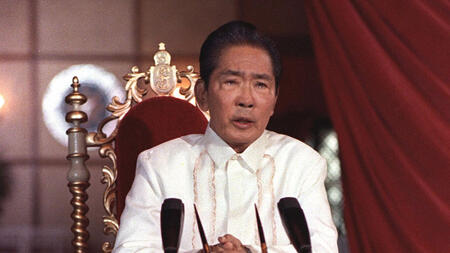
Philippines President Ferdinand Marcos in 1986.
People can also do bribery in small but frequent numbers, such as vote-buying. As the election is getting nearer, this will likely happen in rural areas where citizens are likely to choose money because of their economic situation, which will tempt them to accept the bribe (Canare, Mendoza, & Lopez, 2018). In the 2010 election campaign, 30% of the Filipinos were offered money by a politician or local leader (Sampaco-Baddiri & Gonzales, 2015).
Even during this pandemic, citizens are still warned about this issue. Philippine police chief Guillermo Eleazar stated that political candidates might try to buy votes in next year's national elections by taking advantage of the country's growing usage of digital platforms and e-wallets (Patinio, 2021).
All the facts above are just some of the endless bribery cases here in the Philippines. It can be done on a small local community or at a national level of politics that can affect every Filipino, such as the cases of our former Presidents. Despite laws such as Articles 210 to 212 of the Revised Penal Code that prohibits such acts for public officers. It is still evident in our society as if it is legal (Quimbo, Galvez & Santos, 2017).
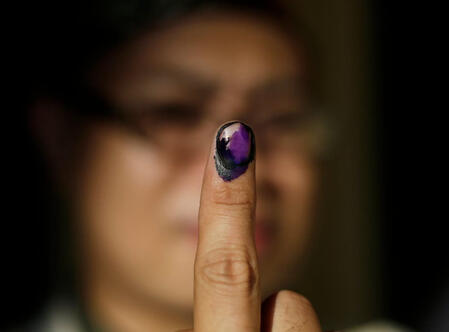
Photo by Francis R. Malasig
In the upcoming 2022 election, citizens need to vote for the right individuals with the qualified background, such as a candidate with a law degree and years of experience in the government that will help the Filipino stop the corruption in our country. Being famous or a shallow reason such as the candidate being handsome is not a reason to vote for someone. Filipinos need someone competent and transparent in all their actions. Let us end this cycle of corruption slowly but surely.
References (APA FORMAT)
Canare, T., Mendoza, R., and Lopez, M. (2018, October 18). An empirical analysis of vote buying among the poor. South East Asia Research. https://www.tandfonline.com/doi/abs/10.1177/0967828X17753420?journalCode=rsou20&
Cornell Law School. (2021) Bribery. LII / Legal Information Institute. https://www.law.cornell.edu/wex/bribery
Gotinga, J. (2020, October 20). “Pastillas” scam masterminds amassed up to P40 billion – Hontiveros. Rappler; Rappler. https://www.rappler.com/nation/hontiveros-says-pastillas-immigration-scheme-masterminds-amassed-billions
Malig, Jojo. (2013, April 12). “Omega 12” behind Marcos’ martial law - US envoy. ABS-CBN News; ABS-CBN News. https://news.abs-cbn.com/focus/04/12/13/omega-12-behind-marcos-martial-law-us-envoy
Official Gazette of the Republic of the Philippines. (1990, October 3). The Final Report of the Fact-Finding Commission: II: Political Change and Military Transmition in the Philippines, 1966 – 1989: From the Barracks to the Corridors of Power | GOVPH. https://www.officialgazette.gov.ph/1990/10/03/the-final-report-of-the-fact-finding-commission-ii-political-change-and-military-transmition-in-the-philippines-1966-1989-from-the-barracks-to-the-corridors-of-power/
Patinio, F. (2021, August 16). Comelec seeks experts’ help vs. “techie” vote buying. @Pnagovph; Philippine News Agency. https://www.pna.gov.ph/articles/1150602
Quimbo, R., Galvez, G. & Santos, C. (2017, May 14). Anti-Corruption in the Philippines - Global Compliance News. Global Compliance News. https://www.globalcompliancenews.com/anti-corruption/anti-corruption-in-the-philippines/
Sampaco-Baddiri, N. & Gonzales, J. (2015, April 22). Campaigns Against Vote-Selling in the Philippines: Do Promises Work?. Innovations for Poverty Action. https://www.poverty-action.org/study/campaigns-against-vote-selling-philippines-do-promises-work
Yap, DJ. (2020, October). “Pastillas scheme” bribe takers got P40 billion from Chinese – Hontiveros. INQUIRER.net. https://newsinfo.inquirer.net/1350521/risa-pastillas-bribe-takers-got-p40b-from-chinese